Best Sanskrit words for yoga and awakening

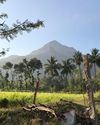
For many years I have been traveling to India, diving deeper into Advaita and also into Yoga. I live both wherever I am in the world – of course also in India. From there comes Sanskrit. This ancient Indian language is in its oldest form the language of the Vedas. The word list with many Sanskrit words will help you to better understand some texts about spiritual awakening and enlightenment on the website of Madhukar Enlighten Life.
Sanskrit word list related to awakening & enlightenment
What does Sanskrit have to do with spiritual awakening and enlightenment? All the elementary terms used to describe awakening and enlightenment come from Sanskrit. To realize awakening and enlightenment, it is not necessary to know the terms. Nevertheless, they appear again and again. This may be because the West simply lacks this kind of experience. Because apart from Meister Eckhardt’s. “Isness” there are no other terms in the Western language area. So if you like to understand texts that are peppered with Sanskrit terms, this Sanskrit word list can help you. It can also serve as a yoga vocabulary.
What is Sanskrit?
Sanskrit is an Indo-European language of the oldest Indian literature. It is the language of sacred scriptures, mantras, yoga and yoga philosophy. Thus, it is a sacred language. It consists of several varieties of ancient Indian. In this word list it is called (Sanskrit). There are rules for pronunciation that are passed from mouth to ear by the pandits (scholars). This is to ensure that the power of the words is preserved and does not change.
What does Sanskrit mean?
संस्कृत saṃskṛta, literally it means “composed, adorned, formed”.
How old is Sanskrit?
It is a language at least 3,500 years old. However, some claim Sanskrit was spoken over 6,000 years ago. So presumably the language is older than 3,500 years. At that time, Sanskrit was spoken throughout South Asia and was the most important language in Hinduism.
Is Sanskrit still spoken?
Yes, Sanskrit is still one of the 18 national languages recognized in India. Especially in the yoga tradition, Sanskrit is actively used. Mantras are written and chanted in Sanskrit.
Where is Sanskrit still spoken?
There are universities in India to this day where Sanskrit is spoken. That is a total of 18 universities where Sanskrit is spoken, including Varanasi. In addition, individual localities or cities have set themselves the goal of actively using the language to keep it alive.
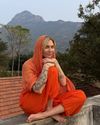
Sanskrit terms & spiritual words
Now we start with the list of Sanskrit words and spiritual terms.
Advaita
Teaching of Non-Duality. Absolute Oneness. Vedanta teachings derived from the Vedas. Popular in the West as Existential Phi- losophy.
Advaitin
Someone who lives Advaita, who has realized Oneness.
Ahamkara
Ego, or transitory I, one of the five inner organs in Indian philosophy.
Alandi
Village in the Pune district, Maharastra. Site of the Samadhi of Marathi Saint Jnaneshwar.
Anand Shakravati
Traditional local Hindu festival during which people fast during the day.
Ananda
Spiritual bliss.
Ananda Maya Kosha
One of the five sheaths of the body, “sheath made of bliss.”
Antahkaranas
The five inner organs in Indian philosophy (Knowledge, Mind, Intel- lect, Memory, Ego).
Arjuna
The student of Krishna whose instruction is related in the Bhagavad-Gita.
Arunachala
Holy mountain in Tamil Nadu, Southern India, where Sri Ramana Maharshi spent most of his life. (A-runa-chala = Mountain that severs the bonds of servitude)
Asana
“Seat.” Practice of Hatha Yoga, the third stage in the Yoga Sutras of Patanjali.
Ascetism
Physical and mental exercises; rigorously spartan life-style of renunciation with the goal of realizing moral and religious ideals.
Ashram
Place where people live together in search of Truth, God and Self-Realization. A place of meditation and silence that usually develops around a Master.
Asura
In the Vedic texts, this originally means “being full of life force.” Refers to a class of gods, and later also to demons.
Atma Vichara
Self-enquiry. The essent- ials of Advaita and Jnana Yoga include not only surrender but also Self-enquiry based on the question “Who am I?” (Nan Yar).
Avatar
“One who descends.” Incarnation of a divinity.
Bhagavad Gita
Section of the Mahabha- rata (important Indian religious saga, heroic epic), in which Krishna gives instruction to his Devotee Arjuna.
Bhagavan
“One who possesses happiness or bliss;” for Guru or God.
Bhagavatam
Writings devoted to the life and teachings of Krishna.
Bhakti
Surrender to and love of the Self, God or a Master.
Bhakti Vedanta
Designation for real togetherness with Krishna; visions.
Bidis
Hand-rolled Indian cigarettes.
Bodhi-Tree
Sacred fig tree. Siddhartha Gautama was sitting beneath this tree when he realized his highest being and became the Buddha.
Bön
Was the dominant religion in 8th cen- tury Tibet when Buddhism arrived. For its adherents, Bön signifies “Truth,” “Reality,” “True Teachings.”
Brahman
The uppermost caste in Vedic society. Someone who has studied the Vedas and is capable of providing leadership to society.
Brindavan (also Vrindavan)
Place in Northern India where Krishna grew up.
Buddha
“Awakened One, Intellectual.” Formerly Siddhartha Gautama. Lived from 563–483 B.C. in what is now Nepal and India. Taught the Dharma and founded Buddhism.
Buddhi
Intellect, one of the five inner or- gans in Indian philosophy.
Buddhism
Tradition of teaching and religion that goes back to Siddhartha Gautama, the historical Buddha.
Butterfly Dream
The no doubt most famous parable of the Zhuangzi is the socalled Butterfly Dream: “Once Zhuang Zhou was dreaming and became a fluttering butterfly, light-hearted and in tune with his intentions. He knew nothing of Zhuang Zhou. When suddenly he awoke, Zhuang Zhou was completely and fully present. Now it is uncertain whether a Zhuang Zhou becomes a butterfly while dreaming, or whether a butterfly, while dreaming, becomes a Zhuang Zhou. If both a Zhuang Zhou and a butterfly exist, then there must be a difference between them. This is called the transfiguration of things.”
Catharsis (Greek)
“Purification” from spiritual conflicts and tensions.
Chakras
Subtle energy centers in the human body.
Chennam (Kshana)
In classical Indian philosophy, the length of a single moment of observation is called kshana (1/4500 of a minute or 0,0133 seconds).
Chenpo
Teaching of Perfection; path of self-liberation in Tibetan Buddhism.
Chitta
Memory, one of the five inner organs in Indian philosophy.
Dao, Chiense
“The path.” Being underlying all reality, immanent and transcendent highest reality. Representatives include Laotse (with his famous book Tao te kin) and Zhuangzi. Along with Confucianism and Buddhism, Daoism is the third pillar of Chinese philosophy and religion.
Darshan
“To look at;” from the Sanskrit root drs – to see. The gaze of a sage or saint. To be in his presence.
Devotee
“One who is devoted.” Devotion is love in utter surrender and dedication to a thing, a Master or God.
Dharma
“Harmony of Mind.” The teachings of the Buddha. Also: the purpose indwelling in people or things, divine law; in Hinduism, also a code of conduct, an ethically pure prescribed way of life.
Draupadi
Wife of the five Pandava brothers from the epic Mahabharata.
Dzogchen, Tibetan
“Great Perfection.” Refers to teachings that in Tibetan Buddhism and Bön are transmitted as the essence of the teachings of Buddha.
Eros
In Greek mythology the god of love. For Plato, the philosopher of Beauty, Eros is a helper on the path to knowledge and stands for a friendship-transcending form of love that me- diates the attainment of knowledge between teacher and student as pedagogical Eros. Life drive, one of the two main drives in Freudian psychoanalysis.
Ethics, Greek
“The moral (science).” One of the great subdivisions of philosophy, concerned with human actions.
Eudaimonia
Philosophical term for a state of blissfulness and spiritual wellbeing. Refers to the teaching of virtuous ethics founded by Socrates.
Freya
Germanic goddess of fertility, love and love magic.
Gana Puja
Ritual in the Tibetan Dzogchen. GAUTAMA See Buddha.
Gayatri Mantra
Most famous Vedic Mantra. “Om, may the venerable, light-filled glory of the Highest enlighten us so that, meditating on That, we can realize the highest Truth.” In the Bhagavad Gita, Krishna identifies with this mystical Mantra.
Gopi
Krishna’s companions, “female cowherd.” The love between Krishna and the Gopis represents the eternal love between God and his Devotees.
Guru
“One who drives away darkness;” spiritual Master; “Guri,” Sanskrit concentration.
Hanuman
“Son of the wind,” monkey god from the Hindu epic of the gods, Ramayana.
Harilal
One of the names of Krishna, first name of H.W.L. Poonja (Papaji).
Heart-Sutra
Belongs to the most famous texts of Mahayana Buddhism; Sutra (“thread”) of the highest wisdom; also seen as the most concise summary of so-called Prajnaparamita literature, a 600 volume compilation of the teachings of Buddha.
Hedonism
Branch of philosophical-ethical thought that sees pleasure as the highest good and as a prerequisite for bliss and a good life.
Heisenberg Uncertainty Principle
Fundamental principle of modern physics and statement of quantum mechanics: position and momentum of particles cannot be simultaneously known to an arbitrarily high level of precision. An electron is not a particle found in a determinate location on a path around the nucleus but rather describes the sum of probabilities as to where this electron might be situated.
Heraclitus
Important pre-Socratic Greek philosopher. Logos as the world’s Existence Principle, ca. 540–480 B.C.
Hridayam
Sanskrit “Heart,” used by Sri Ramana Maharshi to mean the true Self.
Incarnation
Incarnatio (Lat.): “Becoming flesh,” refers to the incarnation of the divine in human form.
Istri
Female energy of the Universe.
-Ji
Suffix added to a name as an honorific (Hindi, Sanskrit), to show respect and give honor (see Papaji).
Jivan Mukta
Human being who achieves liberation during his lifetime.
Jnana
Knowledge (of the Self), realization of the final Truth, related to the Greek term concept Gnosis.
Jnana Yoga
Yoga of the highest Knowledge.
Jnani
Knowing One, Self-Realized One.
Kali
Hindu goddess of time and transformation, destroyer of ignorance.
Karma
Has three different meanings:
1. action
2. consequences of actions
3. fate
Kashyap
Devotee of Buddha.
Kosha
“Sheath.” The Vedas describe five sheaths that surround our innermost core.
Krishna
“Attractive One.” Popular Hindu divinity. The eighth Avatar of Vishnu. Lived presumably around 3200 B.C.
Kundalini
Energy dormant in human beings described in Tantric writings and symbolized as a snake; yogis apply techniques to awaken this energy and experience Enlightenment.
Langhotee
Indian loincloth for a man.
Laotse
Chinese philosopher and religious leader, said to have lived during the 6th cen- tury B.C. Founder of Daoism.
Logos, Greek
Refers to all the expressions of “Reason” represented in language; the spect- rum of meanings extends from word, sentence and speech to definition and relationship to calculation, tenet.
Maharshi
Sanskrit: “Great Seer.”
Maharshi, Sri Ramana
Sat-Guru, one of the greatest spiritual Masters of our time, lived in Tiruvannamalai, India; revered worldwide as the “The Sage of Arunachala.” 1879–1950.
Mahayana
“Great Vehicle” (maha – great; yana – vehicle). One of the three main branches of Buddhism.
Mahayoga
Form of Yoga with the goal: Oneness with the Divine.
Mala
Rosary (Hind./Buddh.) consisting of 108 beads made of seeds, wood, bones or horn.
Manas
Mind, one of the five inner organs in Indian philosophy.
Mandala
Circular or square image found in many cultures representing divinities or the cycle of creation as a symbol of the One, Indivisible.
Manitou
Algonquin Indians use this term to signify a power that dwells in and flows through every animate and inanimate being.
Mantra
Holy word or holy words, of which the most famous is OM. The repetition of Man- tras is one of the most common forms of Sad- hana.
Marathi
Indian language spoken in what today is Maharashtra State in Western India.
Maya
Deception, superimposition, illusion, causes the One Absolute to appear as Many (the world). Papaji: “What is and is not.”
Menaka
“Jewel.” The vision of a beautiful woman.
Metaphysics
Teaching of the Original Causes of Being that go beyond what can be experienced and perceived.
Metzinger, Thomas
Neurophilosopher who teaches at the University of Mainz. “There is no Self.” (Madhukar: “There is no personal Self.”) Outstanding researcher in the field of consciousness.
Multiverse
The idea that the observable Universe is only part of the whole reality led to the definition of a Multiverse containing many possible universes. The term was coined in 1960 in a lecture on the many-worlds interpretation in quantum physics.
What does Namaste mean? नमस्ते, Sanskrit
Literally translated, Namaste means “I offer my reverence to you.” It is performed by placing the hands together so that they touch the body near the chest, usually accompanied by a slight bow. Others translate “Namaste” as “I greet the divine within you.” I’ve written about this in a bit more detail here.
Nagarjuna
Indian mystic. Considered the first historically significant figure in the context of Mahayana Buddhism.
Neti-Neti
“Not this, not that;” a method of classical Advaita, in which everything is rejec- ted that can be named or understood; only unchangeable Reality remains.
Neumann, John von
(Margittai Neumann János Lajos); mathematician of German-Hungarian origin. One of the fathers of computer science, 1903–1957.
Nirvana
Term for the Buddhist goal of salvation, escape and liberation from Samsara, the cycle of suffering.
Nissargadatta Maharaj, Sri
Guru and Advaita Master. 1897–1981, Bombay, India.
Norbu, Chögyal Namkai
One of the most important living Dzogchen Masters. Professor at the University of Neapel. Born 1938 in Derghe in Eastern Tibet (See Dzogchen).
Om
Ancient, cosmic sound, the sacred sylla- ble from which all Creation arises.
Om Nama Shivaja
Mantra of the Devotees of Shiva.
Osho
Indian mystic and philosopher, founder of the Neo-Sannyasin movement; also called Bhagwan and Rajnees (Chandra Mohan), 1931–1990.
Oxytocin
Hormone. Plays an important role in the birth process; influences the behavior between mother and child. Released in the brain by affectionate caresses and sexual intercourse, has an opiumlike effect; also known as the “cuddle hormone.”
Paisam
Ceremonial feast, Southern India. PALI Buddha’s language, Middle Indian, derived from the Vedic (and now extinct).
Pandava-Brothers
Yudhishthira, Bhima, Arjuna, Nakulam and Sahadava; heros of the Mahabharatha.
Papaji
Sri H.W.L Poonja, Guru. “The Lion of Lucknow.” Student of Sri Ramana Maharshi, Krishna Bhakta. 1910–1997, was called Papaji (venerable father) by his Devotees. See Poonja.
Parmenides of Elea
Greek philosopher, lived between the late 6th and 5th centuries B.C. “There is only the one Being.”
Parvati
“Daughter of the Mountains.” Indian goddess, wife of Shiva.
Patanjali
Indian author of the Yoga Sutras, about whose life nothing is known. Yoga is presented as an eight-limbed path (Ashtanga Yoga). The final goal is Samadhi, complete stillness of mind.
Phantasmagoria
Magic, deception, apparition.
Plato
Greek philosopher, student of Socra- tes. Practiced a radical questioning as a way to school the thought (“I know that I do not know anything!”). Founded the Academy, the first school for philosophy in Athens. “The Divine is the Beautiful, the Wise, the Good…” 427–347 B.C.
Poonja, H.W.L. Sri
“The Lion of Lucknow.” Jivan mukta and Guru. Student of Sri Ramana Maharshi. Called Papaji (venerable father) by his Devotees. Born 1910 in Punjab, now Pakistan, died 1997 in Lucknow, India. Awakened in 1944 in the presence of his Master Ramana Maharshi. Guru of Madhukar. See Papaji.
Prajna
Great, comprehensive wisdom (“transcendental knowledge”) that penetrates all things and phenomena in the entire universe.
Prajnaparamita (Buddh.)
Transcendental, complete wisdom.
Puja
Religious ceremony, ritual.
Purusha
Man, human, mankind, person, original soul; Ruler of Immortality, metaphy- sical World Spirit.
Radha
“Inner Power of Joy;” beloved of Krishna; embodiment of Beauty, epitome of Blissfulness and Empathy; also called “the Golden One.”
Ramana
see Maharshi, Sri Ramana. REINCARNATION Rebirth in another form or person.
Retreat
A seminar-like event. Find the retreat schedule here.
Rishi
“Seer,” enlightened saint who has real- ized his true Self through introspection.
Roth, Gerhard
Neuroscientist, Professor of Behavioral Physiology. Holds the view that there can be no free will from the point of view of neurobiology or the natural sciences in ge- neral.
Sadducee
Scholars of the written word. A Jewish group with friendly ties to Rome; the greatest force in the High Council at the time of the Second Temple, ca. 150 B.C.–70 A.D.
Sadhana
Spiritual exercises with the goal of Enlightenment.
Sahaja Samadhi
Natural awakened Being; the Enlightenment of the Jnani, who is apparently also occupied with worldly things.
Samadhi
Ramana Maharshi used this term to designate a state in which one has a direct experience of the Self. Also a memorial to de- parted Masters.
Samsara
“Constant Wandering.” Term for the everlasting cycle of being, the repetition of becoming and passing away, the cycle of rebirth. In its deeper meaning, however: Suffering.
Sangha
Community, collective, horde. In this blogpost you find a deeper explanation.
Sannyasin
One who takes a vow to renounce the world and devote himself entirely to striving for Enlightenment.
Sanskrit
Indo-Germanic language of the oldest Indian literature. Indicated in this glossary by Sanskrit.
Sat – Chit – Ananda
Existence-Conscious- ness-Bliss (according to Madhukar: Peace).
Satguru (Sadguru)
“True Guru;” one’s own Self manifested in human form. Transmit- ter of Awakening.
Satsang
“Community in Truth.” Alliance with Being; in the presence of one who has realized the Self. Meeting. Public gathering. On this page you find more information about it.
Self (Advaita)
Unchanging, undivided, eternal Consciousness that underlies all phe- nomena. Beyond space and time, the Eternal. Oneness of Atman and Brahman (Brahman here: The Absolute or Godhead).
Self (Neurophilosophy)
With the help of neurophysiological experi- ments, experiential states (personal identity, Self) are explained and vice versa. Neurophi- losophers are currently not in agreement as to whether this personal identity exists or not.
Shamanism
Religious-magical phenome- non making use of altered states of conscious- ness, the motif of the journey of the soul and the interaction with spirits as fundamental ele- ments.
Shankara
Also known as Shankaracha- rya. Important Advaita mystic, reformer and philosopher, ca. 788–820. The first to dissemi- nate the teachings of the Advaita Vedanta.
Shiva
Sanskrit “The Auspicious One.” Formless Universal. Ecstasy Principle. In the Hindu Trinity, God of destruction and dissolu- tion. Ramana Maharshi also used this word to name the Self.
Shunyata
Central term in Mahayana Buddhism. It signifies emptiness, void, and also insubstantiality.
Siddharta
“The One who has attained his goal.” See Buddha.
Singer, Wolf
Physiologist and one of the most famous neuroscientists in Germany. Rejects the notion of free will.
Sita
Wife of the god king Rama. In the hero- ic epic Ramayana, which entered into the epic traditions of Bali, Cambodia and Thailand in the course of the first century with the influx of Indian culture, she is rescued by Hanuman.
Skandashram
Ashram in Southern India in which Ramana Maharshi lived from 1916–1922.
Socrates
Greek philosopher who laid the foundations for Western thought. “I know that I do not know anything.” Condemned to death for refusing to recognize the gods and exerting a harmful influence on youth. 469–399 B.C.
Solomon
(Also known as Salomo) Third king of Israel and Judäa. Ruled from 965–926 B.C.
Spooky Action at a Distance
Description used by Albert Einstein for the entanglement (quantum entanglement) of particles to form an unitary system regardless of their distance from one another.
Sri
“He who promises happiness, He who stands under a lucky star.” Often added to a name as an honorific prefix.
Strings
Unlike in the standard model of particle physics, in string theory “strings” are the fundamental building blocks the world is made of. These are vibrating, one-dimensional objects of highly concentrated matter/energy.
Subramania
Shiva’s second son. River in Karnataka, Southern India.
Superposition of States
Quantum physics. Quantum mechanical objects remain in an ambiguous state until they are observed; until this point, several possible states exist at the same time.
Sutra
Sanskrit “Thread.” Distinctively formulated aphorism in Indian literature. Buddhist sacred texts.
Swami
“Belonging to oneself;” religious/ spiritual teacher. Respectful form of address for older monks.
Tammuz & Ishtar
God of Vegetation and Sumerian Queen of Heaven whose yearly reunion lifted the spell of drought, causing the land to blossom; Akkadian and Aramaic mythology.
Tantra Sanskrit
Tan, “expansion;” also “woven cloth, continuum.” Esoteric Hindu and Buddhist Teachings of Knowledge based on the inseparability of the Relative and the Abso- lute. Practices for achieving Enlightenment through visualization, meditation, Mantras. In the West, Tantra is often reduced to the trans- formation of sexual energies or a method of achieving sexual fulfillment.
Testosterone
Important sex hormone (androgen), that has been found in both sexes. A surge of testosterone in the eighth week of pregnancy causes the fetus to develop as a male.
That
The Unnameable that lies beyond all knowledge. Self, Being, Consciousness.
Theory of Relativity
According to Albert Einstein, Swabian-Jewish Nobel Prize laureate in Physics. 1879–1955. Describes the nature and phenomena of space, time and gravitation.
Teresa of Àvila
Carmelite saint; Christian mystic of great experiential depth, 1515–1582.
Tiruvannamalai
Temple city in the Southeast Indian state Tamil Nadu, at the foot of the holy mountain Arunachala.
Unio Mystica
Mystical experience of Oneness in Christianity.
Unsui
Zen monk, (Jap.): “Cloud Water.”
Upanishads
The concluding observation of the Vedas. They form part of Vedanta philosophy.
Vajrayana
“Diamond Vehicle;” a form of Tantric Buddhism, the two methodical approaches are Mahamudra (“Great Seal”) and Dzogchen (“Great Perfection.”)
Veda Sanskrit
“Knowledge,” see Vedas.
Vedanta
One of the most important bran- ches of Indian philosophy, literally: “End of Knowledge,” “Perfection of Knowledge.”
Within the Vedanta there are several directions of which Advaita-Vedanta is the most impor- tant.
Vedas
Collection of sacred texts written between 2000 and 500 B.C., (according to H.W.L. Poonja composed 25,000 years ago and passed down in the oral tradition); considered the highest authority in Hinduism.
Vichara
Self-enquiry
Vivek
A Sanskrit Ability to differentiate between Real and Unreal. Critical, sharp intellect.
Vyasa
Mythical sage, considered the author of the Vedas.
Wotan (Odin)
Germanic god. In Norse mythology, the god of battle, of wisdom, magic and poetry.
Yamaha
Also Yama. Hindu god of death and lord of righteousness.
Yamuna
Hindu goddess; Indian river that flows into the Ganges at Allahabad.
Yoga
Spiritual method, mastery of the body and liberation of the mind, the goal is unity with God.
Yogi
One who practices Yoga in an advan- ced level.
Yudhishthira
One of the Pandava brothers, the surviving hero of the Mahabharata.
Zen
Form of Buddhism that arose in China beginning in the 5th century.
Zhuangzi
Chinese Master Zhuang Zhou, Daoist philosopher and author whose work is named after him, the Zhuangzi. See Butterfly Dream, ca. 365–290 B.C.
Om Tat Sat.
Om Shanti, Shanti, Shanti
Om is truth.
Om is peace, peace, peace.
There is a great correspondence of this Sanskrit word list with the glossary from the book Oneness.
Therefore, the list does not only contain Sanskrit terms. You can download the book "Oneness” in English here on the website for free.
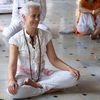
Hi, I’m Shivani
Blogger and podcaster at Madhukar Enlighten Life. I’ve known Madhukar since 2004 and do what I can to ensure that his effective message of happiness reaches as many people as possible. This post came from my pen – and ChatGpt helped me a little.
Upcoming Retreats & Events
Step out of daily distractions and enter a space of silence, inquiry, and presence. These retreats, offered both online and in person, support you in experiencing lasting inner peace and clarity in a safe, guided environment.

Home in Zakynthos
A luxurious Mediterranean escape dedicated to vibrant joy, philosophical depth, and the profound peace of your natural state.

Self-Love Retreat - Autumn at the Hermitage in Switzerland
A high-impact 5-day retreat in the heart of Europe. Transcend your limits and anchor yourself in Self-Love.

Self-Love – Enlighten Life Online Retreat
5-Day Self-Love ONLINE Retreat 2026. Let me guide you to a deeper understanding of LOVE, of self-love and divine love.

Crowning Glory - Enlighten Life Online Retreat
Complete the year with Madhukar in silence, clarity, and conscious alignment. Crowning Glory – Enlighten Life Online Retreat brings you together between Christmas and New Year through live Satsangs, meditation, and an international community—wherever you are in the world.
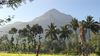
21 Day Silent Meditation Detox Ashram Retreat India
Three weeks of silence at the foot of holy mountain Arunachala. An intensive journey inward, guided by Madhukar in the sacred atmosphere of an Indian Ashram. Are you ready for a life-changing experience?

The Atitlán Awakening – Guatemala
Awaken between volcanoes and sacred waters. A transformative 8-day journey to your natural state of peace and vital joy with Madhukar.